

The Rare Breed Trigger: The Forced Reset Tech That Shoots This Fast
What if your firearm’s trigger could be tuned to the exact performance of a rare, vintage competition rifle without altering its original parts? The rare breed trigger is a precision-engineered drop-in mechanism that replicates the crisp, short reset and light pull weight characteristic of historically significant match triggers, using a proprietary sear geometry and adjustable over-travel stop. It installs in minutes with standard hand tools, replacing only the factory trigger group while preserving all safeties and external controls, and delivers a consistent, sub-2-pound break that enhances shot-to-shot accuracy for competitive and precision shooters. Its core benefit is delivering a historically faithful trigger feel in a modern, reliable package, and you can fine-tune it via a single set screw to match your preferred pull weight and travel.
What Exactly Is a Rare Breed Trigger and How Does It Differ From Factory Triggers?
A Rare Breed trigger is a forced-reset trigger (FRT) designed to mimic full-auto fire while remaining semi-automatic. Unlike a factory trigger, which uses a standard sear reset that requires a full finger release, the Rare Breed’s internal cam forces the trigger forward immediately after the shot, letting you hold the trigger down and ride the bolt’s recoil for rapid, controlled bursts. Factory triggers prioritize a clean, consistent break with a fixed reset point, whereas the Rare Breed prioritizes speed and cyclic rate, sacrificing the tactile wall and deliberate reset feel. The mechanics differ fundamentally: a factory trigger relies on your finger to re-engage the sear, while the FRT uses mechanical linkage to push the trigger into your finger. The key difference is that a Rare Breed fires on the release—not the pull—after the first round. Q: Does it work with any AR-15 lower? A: No, it requires a specific carrier profile and often a tuned buffer for reliable forced-reset function.
Understanding the Core Mechanics Behind This Drop-In Upgrade
The real magic of a Rare Breed trigger lies in how its internal sear frt-15l3 geometry eliminates the traditional trigger reset. Instead of a physical reset lug catching the hammer, the Rare Breed uses a rolling, cam-driven mechanism that lets the hammer follow the bolt carrier forward. This means the trigger fires from the same forward position every cycle, mimicking a binary-like pull without any selector switch changes. The disconnect is purely mechanical, relying on bolt travel to re-engage the trip lever. You get a consistent, light pull that breaks the moment the bolt closes, with zero wait for a spring-loaded reset.
- The trigger’s trip lever is pushed down by the bolt carrier, not by your finger, to re-cock the hammer.
- There’s no tactile or audible reset click—the shot fires instantly upon bolt closure.
- Internal tolerances are tighter than factory triggers, keeping the sear surfaces in constant contact.
- Because the hammer never fully “drops” to a resting position, you avoid the standard trigger’s travel distance.
Key Differences in Pull Weight, Reset, and Take-Up Compared to Stock Units
The most immediate difference you will feel is in pull weight, reset, and take-up compared to stock units. A factory trigger typically has a gritty, spongy take-up of several millimeters before a heavy 5–7 lb break. In contrast, a Rare Breed trigger nearly eliminates that slack, delivering a crisp, consistent break at around 3.5 lbs with almost no perceptible creep. The reset is drastically shorter—often just a fraction of an inch—allowing for rapid follow-up shots without your finger leaving the trigger face. While the take-up feels almost non-existent, it is the violent, immediate reset that truly separates this system from a standard AR trigger. You trade a long, mushy pull for a two-stage-like precision, but with a binary-capable speed that stock internals never replicate.

- Pull weight drops from ~6 lbs to ~3.5 lbs with a wall that is sharp, not rolling.
- Take-up is reduced to under 1/8 inch, removing the “slack” before the sear releases.
- Reset is 50–70% shorter than mil-spec, enabling faster trigger finger recovery.
Why Shooters Choose This Component for Precision vs. Speed
For shooters chasing a competitive edge, the choice hinges on whether they prioritize surgical accuracy or blistering cadence. A rare breed trigger’s forced-reset design collapses the time between shots, letting you keep the muzzle flat and fire on the rebound without lifting your finger. That speed isn’t a trade-off for control—the crisp, predictable break still allows precise follow-ups at distance. Precision shooters use the short reset to micro-adjust between targets, while speed-focused competitors exploit the binary-like cycle to outrun standard triggers. The component’s real value is adaptability: you don’t modify gear, you modify tempo.
- Faster follow-up shots without losing sight picture alignment.
- Reduced trigger travel tightens shot-to-shot consistency for controlled pairs.
- Enables “burst” accuracy at close range while retaining single-shot precision on demand.
How to Install and Tune This Trigger System in Your Firearm
Begin by ensuring the receiver is clear and the hammer is decocked. For a Rare Breed trigger, drop the unit in as one assembly, aligning the rear pin first, then the front. Rotate the safety to verify it snaps crisply—if it drags, the trigger housing is seated too high; re-seat with downward pressure on the rear lug. Tuning starts with the included adjustment screw for over-travel: turn it clockwise until the break feels glassy, then back out ¼ turn to avoid slam-fires. Check sear engagement by slowly releasing the hammer—it must catch with zero creep. Do not oil the sear surfaces, as viscosity alters the binary reset timing and can induce doubles. After reassembly, dry-fire with snap caps, confirming the bolt carrier group resets the trigger on each stroke. Finally, test fire with five rounds in a safe direction to confirm the forced-reset function cycles reliably, and re-tighten all pins to spec after 200 rounds, as vibration can shift the housing and degrade timing.
Step-by-Step Fitting Process Without Professional Gunsmithing
Alright, let’s walk through the step-by-step fitting process without professional gunsmithing for your rare breed trigger. First, ensure the firearm is completely unloaded and the lower receiver is removed. Drop the trigger assembly into the pocket, then install the hammer and trigger pins snugly—don’t force them. Next, test the safety selector; it should rotate crisply without binding. If it sticks, lightly polish the engagement surfaces with fine grit. Then, cycle the charging handle to verify the hammer follows correctly and resets cleanly. A tiny bit of resistance here usually means the disconnector needs a micro-adjustment, not a full fitting. Finally, dry-fire a few dozen times to let parts wear in naturally.
- Install pins m249s binary trigger and check for play.
- Test safety and trigger pull weight.
- Function-check reset and slam-fire prevention.
- Apply light grease to contact points only.
That’s it—you’re done without touching a file or a gunsmith’s bench.
Adjusting Pre-Travel and Overtravel for Your Ideal Feel
After securing the rare breed trigger’s sear engagement, dial in pre-travel and overtravel adjustments using the set screws on the trigger shoe. Back out the pre-travel screw until the trigger rests with zero take-up, then turn it in quarter-turns until the break occurs immediately after the slack is consumed; over-tightening will prevent reset. For overtravel, adjust the rear screw so the trigger stops just after the hammer drops—listen for the sear release, then add a hair of clearance to avoid drag. You want the wall to feel crisp, not mushy, so test each increment with the upper receiver closed. Fire a few rounds, then re-check screws for walk-out, applying thread locker only after final settings are confirmed.
Optimal pre-travel and overtravel on a rare breed trigger means minimal slack, a distinct wall, and zero post-break creep—achieved through iterative screw adjustments and live-fire validation.
Tools You Actually Need and Common Installation Pitfalls to Avoid
For the **rare breed trigger installation**, you only truly need roll pin punches, a bench block, and vise grips with padded jaws to manage the hammer spring tension—skip specialized slave pins unless you enjoy frustration. The most common pitfall is improper pin alignment; forcing the trigger pin through misaligned holes shears the receiver’s finish and binds the sear. Another frequent error is reversing the disconnector spring, which causes dead trigger pulls or slam-fires. Always verify the hammer hooks seat fully before reassembly—a half-engaged hammer is the number one cause of malfunction after rare breed mp5 frt install. Rare breed trigger installation pitfalls are avoidable if you never hammer pins without supporting the receiver’s opposite side.

- Use a 1/16” punch for the trigger pin, never a screwdriver.
- Confirm the trigger shoe sits flush against the receiver—gaps indicate a twisted spring.
- Lubricate only the pin channels, not the sear surfaces, to prevent carbon paste buildup.
What Performance Benefits Can You Expect From This Trigger Upgrade?
The performance benefits from this trigger upgrade are immediately obvious once you get behind the trigger. With the rare breed trigger, you’re getting a drastically shorter reset and a near-zero take-up, which lets you rip through follow-up shots at a pace that feels automatic. The trigger’s unique forced-reset design means your finger never has to fully release, so your cadence is limited only by your own speed, not the mechanism. You’ll also notice a crisper, cleaner break with less creep, making it easier to keep your sights on target during rapid fire. Muzzle control stays tighter because you aren’t fighting a heavy pull. In short, what performance benefits can you expect boil down to faster, more consistent shooting with less perceived effort.
Improving Shot Placement and Consistency at the Range
With the rare breed trigger, improving shot placement and consistency at the range comes from its forced-reset mechanic eliminating the need for a full finger release between rounds. This keeps your trigger finger in a fixed, repeatable position, reducing the lateral torque that often pulls subsequent shots off target. The crisp, short reset point allows you to maintain a steady sight picture and cheek weld, as your hand position never shifts during rapid follow-ups. Consistent trigger discipline becomes automatic, as the constant tension required means you’ll naturally develop a smoother, more deliberate press without jerking. Over a full magazine, you’ll notice tighter rare breed trigger groups and fewer flyers caused by inconsistent trigger manipulation.

- Maintain a forced reset trigger super safety constant firing grip to exploit the short, forced reset for identical pull weight each shot.
- Focus on a fixed index point on the trigger face to prevent finger slip and point-of-aim drift.
- Use the predictable reset to time your next shot with your natural respiratory pause, not a rushed slap.
How a Shorter, Crisper Reset Accelerates Rapid Fire
The rare breed trigger’s shorter, crisper reset is where rapid fire truly comes alive. Instead of waiting for a long, mushy trigger travel, your finger only needs a tiny, defined click back before the sear is ready again. This lets you keep your trigger finger in the optimal firing zone, minimizing wasted motion and allowing you to break the next shot almost immediately. The crisp wall right after the reset gives you a clear, tactile signal, so you’re never guessing when the next shot will fire. That predictability is the secret to uninterrupted cadence, as your brain builds a rhythm around a consistent, tiny trigger arc. The result is a fast, controllable hammering that feels less like fighting the trigger and more like simply tapping a beat. Rapid fire with a rare breed trigger becomes a fluid, repeatable motion rather than a frantic yank.

- The shortened reset distance reduces the physical distance your finger must travel between each shot.
- The crisp, audible and tactile reset point confirms readiness instantly, eliminating hesitation.
- Maintaining your finger’s resting position on the trigger shoe cuts out all unnecessary “slack” recovery.
- A consistent reset point lets you time your next pull with your shot recovery, smoothing out your burst.
The Impact on Trigger Finger Fatigue During Long Sessions
During extended range sessions, the Rare Breed trigger’s short, crisp reset reduces the muscle tension required to re-engage the sear, directly lowering cumulative strain in the index finger. Because the trigger’s leverage curve minimizes the need for sustained pressure at the break point, trigger finger fatigue during long sessions becomes less pronounced compared to heavier, longer-pull designs. The reduced travel distance means your flexor tendons perform fewer micro-adjustments per shot, preserving fine motor control late into a drill. However, grip pressure often increases unconsciously when shooters anticipate a heavy pull, so even with this upgrade, deliberate hand positioning remains essential to avoid forearm burnout.
Q: Does the Rare Breed trigger delay fatigue onset in a 200-round unbroken string?
A: Yes—by eliminating the stacking creep that forces constant isometric finger tension, most users report maintaining a consistent trigger index for 30–50% longer before shaking or loss of speed begins.
How to Choose the Right Variant for Your Specific Pistol Model
Choosing the right Rare Breed trigger variant for your pistol demands strict attention to your firearm’s internal geometry. First, confirm your pistol model’s generation, as triggers like the FRT-15 are engineered for specific AR-platform lowers, while other Rare Breed units target striker-fired or hammer-fired designs. **Verify your pistol model’s compatibility** by checking the trigger’s stated frame material and pin size; polymer frames often require reinforced inserts. Next, examine your slide’s cutout depth—a shallow channel may bind the trigger’s cycling bar. **Match the variant’s spring weight** to your recoil assembly; a heavier slide needs a stiffer spring to reset reliably. Finally, test the reset function dry-fire with an unloaded chamber; if the trigger sticks, your model likely needs the alternate shoe version. Prioritize original parts diagrams over scar frt trigger forum claims to avoid misfits.
Compatibility Considerations for Glock, Sig, and Other Popular Platforms
When selecting a Rare Breed trigger for your pistol, compatibility with Glock, Sig, and other popular platforms hinges on the specific generation and fire-control geometry. Glock’s Gen 3 and Gen 4 frames accept standard trigger housings, but Gen 5 models require a different shoe connector angle. Sig’s P320 uses a removable fire-control unit, so the trigger must align with the sear’s flat spring orientation; the P226, conversely, needs a hammer-forged linkage that differs from striker systems. For other platforms, verify the trigger’s trigger-bar width matches your pistol’s slide-stop lever, as a mismatch causes reset failure. Always test the trigger’s pre-travel and overtravel against your frame’s trigger guard depth—tight tolerances on compact models often require fitting. Confirm the drop-safety plunger interface; some designs conflict with the Rare Breed’s internal geometry.
Comparing Trigger Shoe Styles: Flat vs. Curved for Grip and Control
When sizing up a rare breed trigger, the shoe style changes how your finger transfers force. A flat shoe spreads pressure across the pad, which shines for a straight back pull—ideal if you grip high and want to eliminate any sideways torque. A curved shoe hooks your fingertip naturally, offering a more forgiving purchase if your index finger sits lower or you prefer a rolling break. For a rare breed trigger, test this: first, dry-fire with a flat shoe to check if your pull stays crisp; next, swap to a curved one to feel if the tactile hook reduces flinch; finally, choose based on which keeps your sights steadiest during rapid strings.
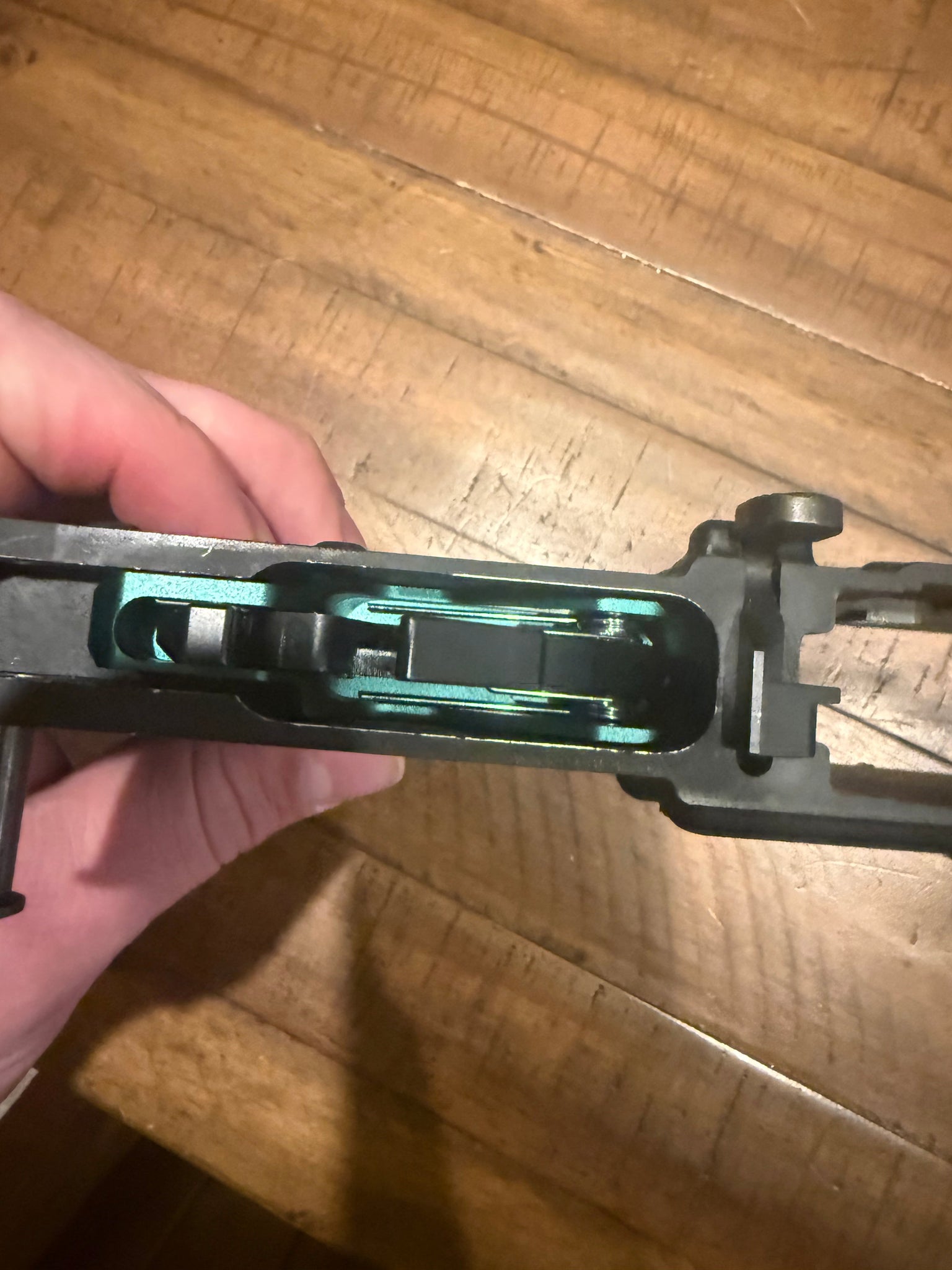
Selecting the Correct Spring Kit Based on Your Ammunition and Usage
Selecting the correct spring kit for your rare breed trigger requires matching spring resistance to your pistol’s ammunition profile and intended firing schedule. Heavier springs suit hot, high-pressure loads or +P ammunition, preventing premature reset and ensuring the hammer reliably engages the sear under increased bolt velocity. Lighter springs, conversely, are optimal for light target loads or competition use with reduced recoil springs, allowing the trigger’s cycling speed to align with slide dynamics. Your usage frequency dictates spring longevity—a high-round-count training regimen demands a stiffer spring to maintain consistent tension, while occasional carry may favor a lower-power spring for a crisper break. Always verify that the spring’s rated weight corresponds to your pistol model’s guide rod and slide mass, as mismatched tension causes trigger bounce or misfeeds. This calibration directly impacts trigger reset reliability under rapid fire, so test with your exact carry or match ammunition before finalizing the kit.
- Choose a heavier spring (e.g., 19–22 lb) for defensive loads with velocities above 1,100 fps.
- Select a lighter spring (e.g., 15–17 lb) for subsonic or reduced-recoil ammunition in competition.
- Match spring tension to your round count per session—beyond 500 rounds, increase stiffness to counteract heat-induced softening.
What Are the Most Common User Questions About This Trigger System?
Most users of the rare breed trigger first ask about installation compatibility—specifically, whether it drops into standard AR-15 lower receivers without permanent modification. The next most common question concerns the binary-like reset function: *does it actually fire one round on pull and one on release, or does it require a specific finger technique?* Owners also repeatedly ask about the trigger’s sear wear over time, wanting to know if the forced-reset design accelerates parts fatigue. Another frequent query involves spring tension—users ask whether adjusting the hammer spring alters the reset speed and if that voids any internal tolerance. Finally, the most practical question is about reliable ammunition:
which bullet weights and primer hardness levels work best to avoid light strikes, since the trigger’s unique cycle depends on consistent primer ignition.
These four concerns dominate every forum thread on the device.
Is It Safe for Everyday Carry and Self-Defense Use?
For everyday carry and self-defense, the Rare Breed trigger’s forced-reset design presents serious practical concerns. Its rapid fire capability increases the risk of unintentional discharges during high-stress draws or re-holstering, as the trigger resets without a distinct manual release. The lack of a traditional trigger pull also makes precise, single-shot accuracy harder to control under adrenaline, which is critical in defensive situations. Moreover, legal liability after a defensive shooting could be elevated due to the trigger’s nature, regardless of actual safety. Reliability under live-fire stress is unproven for EDC use, as dirt or debris can affect the reset mechanism.
Is a Rare Breed trigger safe for everyday carry and self-defense? Most experts advise against it due to increased discharge risk, training incompatibility with standard firearms, and potential legal complications, making a conventional trigger the safer choice for defensive use.
Will It Affect the Reliability of Your Firearm Over Time?
For most owners, the question of whether a Rare Breed trigger affects long-term firearm reliability comes down to maintenance and ammo selection. Over thousands of rounds, the forced-reset mechanism’s faster cycling can accelerate wear on the hammer spring and trigger sear, but this typically manifests as a rougher pull rather than a catastrophic failure. Crucially, the trigger’s aggressive bolt bounce can stress your buffer system and extractor, especially with underpowered loads. **Consistent lubrication of the trigger pocket and regular inspection of the bolt carrier cam pin** are essential to prevent carbon fouling from causing light primer strikes or reset failure. In practice, a properly installed and maintained unit will not compromise your rifle’s core function, but ignoring these small upkeep steps can lead to intermittent misfires over time.
Over time, reliability hinges on proactive maintenance and quality ammunition; without them, increased wear on springs and the sear may cause gradual performance degradation, but the firearm itself remains mechanically sound.
Maintenance Tips to Keep the Pull Smooth and the Mechanism Clean
To keep the pull smooth and the mechanism clean, apply a light, grease-free lubricant specifically to the sear engagement points—not the trigger shoe—since excess oil attracts carbon and grit. After every 500 rounds, disassemble the trigger pack and blow out debris with compressed air, then wipe surfaces with a lint-free cloth dipped in isopropyl alcohol. Avoid soaking the entire unit; instead, dab a single drop of high-viscosity oil on the hammer pivot and trigger return spring. Always let the solvent fully evaporate before reassembly, and never use abrasive brushes or phosphate-stripping cleaners. A dry-film coating or Teflon spray every few months reduces friction without leaving sticky residue. Carbon fouling is the primary enemy—so wipe the bolt tail and trigger connector contact patch after each range session.